The preceeding narrative is merely a notional representation of tenuous clues, the most solid of which is the caption, "Chapel Ludlow Castle," inscribed by the hand of Dr. Hugh Welch Diamond. The Ludlow Chapel photograph is mounted to a page torn from a photograph album which held masterworks by Dr. Diamond, H. P. Robinson and others, removed for two London Sotheby auctions in 1984. Additional pages of prints by unidentified photographers – including the preceding Ludlow photo – were auctioned as "residue" in 1985. It is my contention that the photographers of the residue pages can be identified, but more importantly I will establish that the entire album was compiled by Dr. Diamond.
XX XX XXXX XX XXXXXXXXX XX XXXXXXX XXXXXXXX XXXX XXXXXXX XXXX XXX XX XXXXXXXXXX XXXX XXXXXXX XXXXX XXXX XXX XXXXXX XX XXX XXXX XXXXXXXX XXX XXX XXXX XXXXXXX XXXXXXXX XXXXX XXXXXX XXXXX XXX XXXX XXXXXXXXXX XXX XXX XXXXXXXXXXX XXX XX XXXXXX XXXXXX XXXXXXXXXXXXXXX XXX XXX XX XXXXXXX XXXX XX XX XXXX XX XXXXXXXXX XX XXXXXXX XXXXXXXX XXXX XXXXXXX XXXX XXX XX XXXXXXXXXX XXXX XXXXXXX XXXXX XXXX XXX XXXXXX XXXX XX XXXX XX XXXXXXXXX XX XXXXXXX XXXXXXXX XXXX XXXXXXX XXXX XXX XX XXXXXXXXXX XXXX XXXXXXX XXXXX XXXX XXX XXXXXX XX XXX XXXX XXXXXXXX XXX XXX XXXX XXXXXXX XXXXXXXX XXXXX XXXXXX XXXXX XXX XXXX XXXXXXXXXX XXX XXX XXXXXXXXXXX XXX XX XXXXXX XXXXXX XXXXXXXXXXXXXXX XXX XXX XX XXXXXXX XXXX XXX XXXX XXXXXXXX XXX XXX XXXX XXXXXXX XXXXXXXX XXXXX XXXXXX XXXXX XXX XXXX XXXXXXXXXX XXX XXX XX XX XXXX XX XXXXXXXXX XX XXXXXXX XXXXXXXX XXXX XXXXXXX XXXX XXX XX XXXXXXXXXX XXXX XXXXXXX XXXXX XXXX XXX XXXXXX XX XXX XXXX XXXXXXXX XXX XXX XXXX XXXXXXX XXXXXXXX XXXXX XXXXXX XXXXX XXX XXXX XXXXXXXXXX XXX XXX XXXXXXXXXXX XXX XX XXXXXX XXXXXX XXXXXXXX XXXXXXX XXX XXX XX XXXXXXX XXXX XXXXXXXXXXX XXX XX XXXXXX XX XX XXXX XX XXXXXXXXX XX XXXXXXX XXXXXXXX XXXX XXXXXXX XXXX XXX XX XXXXXXXXXX XXXX XXXXXXX XXXXX XXXX XXX XXXXXX XX XXX XXXX XXXXXXXX XXX XXX XXXX XXXXXXX XXXXXXXX XXXXX XXXXXX XXXXX XXX XXXX XXXXXXXXXX XXX XXX XXXXXXXXXXX XXX XX XXXXXX XXXXXX XX XX XXXX XX XXXXXXXXX XX XXXXXXX XXXXXXXX XXXX XXXXXXX XXXX XXX XX XXXXXXXXXX XXXX XXXXXXX XXXXX XXXX XXX XXXXXX XX XXX XXXX XXXXXXXX XXX XXX XXXX XXXXXXX XXXXXXXX XXXXX XXXXXX XXXXX XXX XXXX XXXXXXXXXX XXX XXX XXXXXXXXXXX XXX XX XXXXXX XXXXXX XXXXXXXXXXXXXXX XXX XXX XX XXXXXXX XXXX XXXXXXXXXXXXXXX XXX XXX XX XXXXXXX XXXX XX XX XXXX XX XXXXXXXXX XX XXXXXXX XXXXXXXX XXXX XXXXXXX XXXX XXX XX XXXXXXXXXX XXXX XXXXXXX XXXXX XXXX XXX XXXXXX XX XXX XXXX XXXXXXXX XXX XXX XXXX XXXXXXX XXXXXXXX XXXXX XXXXXX XXXXX XXX XXXX XXXXXXXXXX XXX XXX XXXXXXXXXXX XXX XX XXXXXX XXXXXX XXXXXXXXXXXXXXX XXX XXX XX XXXXXXX XXXX XX XX XXXX XX XXXXXXXXX XX XXXXXXX XXXXXXXX XXXX XXXXXXX XXXX XXX XX XXXXXXXXXX XXXX XXXXXXX XXXXX XXXX XXX XXXXXX XXXX XX XXXX XX XXXXXXXXX XX XXXXXXX XXXXXXXX XXXX XXXXXXX XXXX XXX XX
|
|
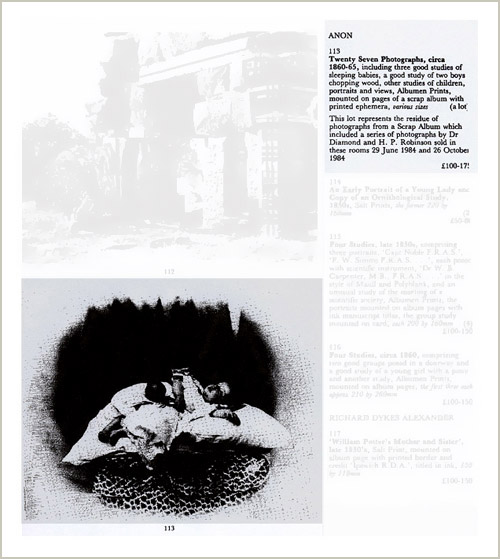
The residue pages of the Dr. Hugh Welch Diamond album were sold as one lot in 1985 in the London rooms of Sotheby Parke Bernet. Copies of the sale catalog are impossible to find, but Sotheby's provided a pdf file of the page with the lot description, illustrated by one of the infant photos. The dates given by the description are wrong—most of the photographs appear to be late 1850's, not 1860's. Also misleading is the count of 27 photographs. This number includes several cameo size cut-outs pasted in the manner of a late Victorian scrap book. The count also includes a half-tone 1890's photograph of a famous actor pasted onto a sheet that is unlike the paper of the other pages. Excluding this sheet, there are 14 pages of photographs in the set, all measuring 282 by 207 mm. The original album was comprised of at least three variants of paper – represented here by 4 pages of gold, 3 of grey-green, and the balance ivory – and there is clear evidence that they were once bound together, not sequentially, but definitely interleaved with missing pages. The Metropolitan Museum acquired one of the Diamond's and it would interest me to see its mount some day (Patient, Surrey County Lunatic Asylum ; sold, Sotheby's London, June 29, 1984, lot 164).
The set came with significant archival problems. Around the turn of the century a teenager took possession of the album and used it as a scrap book, cutting out magazine graphics and pasting them to the pages with a gum arabic based glue. After dismissing the historical value of these paste-ups – there could be only a remote connection to Diamond, H. P. Robinson or another artist of interest – these were removed. Preserved is one graphic which covers over evidence of a photograph once in situ, now gone. There are also some graphics encroaching on the surface of a photograph which will require expert restoration, but fortunately, most of the 1890's pulp was pasted to the back of the pages and no other photographs were damaged. There are no marks anywhere on the residue pages which would identify them with a Henry Bright provenance.