Journal : Revue photographique des hôpitaux de Paris ; vol. 4.
Paris : Adrien Delahaye, 1872.
Description : [1 l. pl.], 139-143 p. ; ill.: 1 phot. ; 24.5 cm.
Photograph : 1 mounted albumen.
Subject : Testes — Tuberculosis.
Notes :
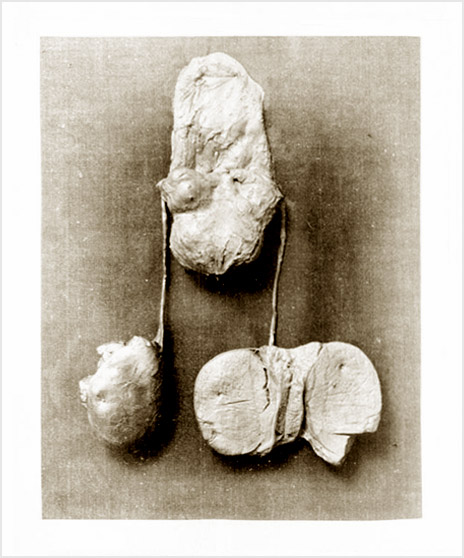
Les organes génito-urinaires sont représentés dans la Planche XIV; sur cette planche qui nous offre en diamètre le
tiers des pièces elles-mêmes, on peut voir la face postérieure de la prostate et des vésicules séminales, la face
postérieure de la vessie, les canoux déférents, le testicule droit ouvert par une section antéro-postérieure intéressant
le corps de la glande et l'épididyme, enfin le testicule gauche.—Page 141.
Autopsic subject was a 45 year-old male journeyman. The photograph represents specimens of the testes, sperm ducts and prostate removed from the body. Both testicles are the size of turkey-hen eggs (oeufs de dinde) and the right testicle was cut open to show the extent of inflammation. Reclus refers to this case in his monograph on tuberculosis and orchitis of the testes titled, Du tubercule du testicule et de l'orchite tuberculeuse (1876, Paris: Delahaye, pp. 44 & 101).